

How a Bank Statement Analyzer Simplifies Financial Audits
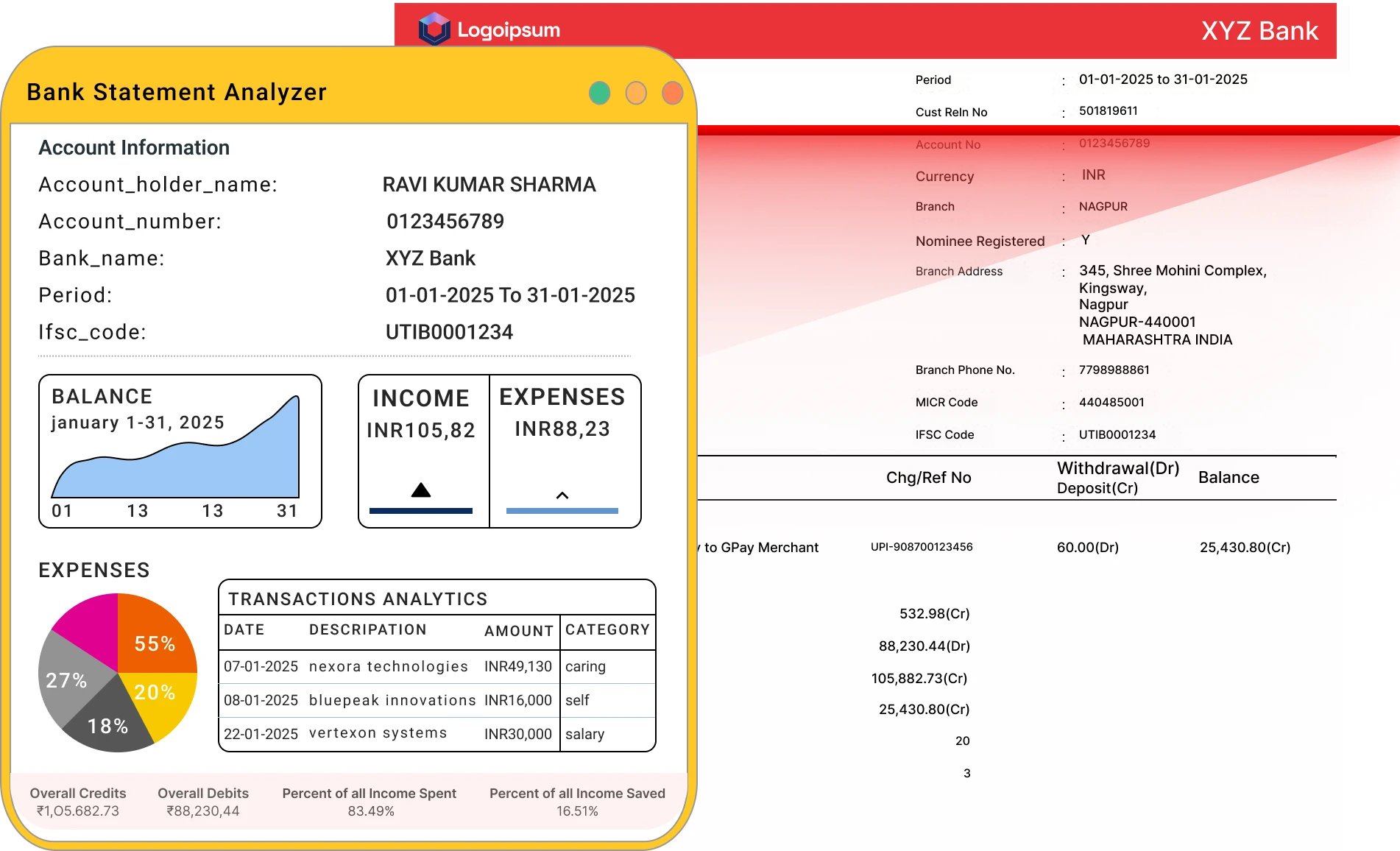
In today’s fast-paced financial world, manual auditing processes are quickly becoming outdated. The increasing complexity of financial data, growing regulatory demands, and the need for accuracy have led businesses and auditors to rely on advanced digital tools. One of the most transformative of these tools is the Bank Statement Analyzer — a technology that streamlines financial audits by automating data extraction, analysis, and reporting.
This article explores how a Bank Statement Analyzer simplifies the audit process, enhances transparency, and ensures compliance for both enterprises and financial institutions.
1. What Is a Bank Statement Analyzer?
A Bank Statement Analyzer is an automated software solution designed to extract, classify, and interpret data from bank statements. It converts unstructured financial data — often found in PDFs or scanned documents — into structured, analyzable formats.
By leveraging AI and OCR (Optical Character Recognition) technology, the tool can accurately read and process thousands of transactions in seconds. Whether used by auditors, lenders, or accountants, a Bank Statement Analyzer API simplifies tedious manual work and minimizes the risk of human error.
2. The Role of Automation in Financial Audits
Financial audits require meticulous examination of income, expenses, and cash flow. Traditionally, this process involved manual data entry, reconciliation, and verification — often taking days or even weeks.
With automation, auditors can now perform these tasks in minutes. A Bank Statement Analyzer tool integrates seamlessly with accounting systems and instantly identifies inconsistencies, missing transactions, or anomalies. This automated verification reduces the need for repetitive manual checks and ensures that financial records are both accurate and audit-ready.
3. Key Features of a Bank Statement Analyzer
Modern Bank Statement Analyzers come equipped with advanced features designed to simplify audits and improve decision-making. Some of the most important capabilities include:
Automated Data Extraction: Instantly captures transaction details such as date, description, amount, and balance from bank statements.
Categorization of Transactions: Uses AI to automatically classify inflows and outflows — such as salaries, payments, and transfers.
Pattern and Anomaly Detection: Identifies suspicious transactions or irregularities that may require further review.
Multi-Bank Support: Consolidates data from multiple accounts and banks into one unified dashboard.
Custom Reporting and Analytics: Generates clear, audit-friendly reports tailored to specific compliance standards.
These features enable auditors to save time, improve accuracy, and focus on analysis rather than data collection.
4. How It Simplifies the Audit Process
The integration of a Bank Statement Analyzer fundamentally changes how audits are conducted. Here’s how it simplifies the workflow:
a. Eliminates Manual Data Entry
Auditors no longer need to input transaction data line by line. The analyzer reads and digitizes the information automatically, significantly reducing errors and time spent.
b. Ensures Data Accuracy
AI-driven verification cross-checks amounts, balances, and account activity, ensuring accuracy and consistency throughout the audit.
c. Provides Real-Time Insights
The tool can generate real-time reports and visual summaries of financial activity, helping auditors and businesses make informed decisions faster.
d. Enhances Transparency and Compliance
Since all transaction data is traceable and verifiable, the auditing process becomes more transparent. It also helps organizations stay compliant with regulatory frameworks such as KYC (Know Your Customer) and AML (Anti-Money Laundering).
5. Benefits for Businesses and Auditors
Using a Bank Statement Analyzer API offers several tangible advantages:
Time Efficiency: Reduces audit preparation time from days to hours.
Cost Savings: Minimizes labor costs associated with manual auditing.
Improved Accuracy: Detects even minor discrepancies automatically.
Data Security: Ensures sensitive financial data is processed securely within compliant systems.
Scalability: Capable of handling thousands of bank statements across multiple clients or business units.
For auditors, these benefits mean greater productivity and reduced operational strain. For businesses, it ensures that financial records remain error-free and audit-compliant at all times.
6. Use Cases Across Industries
The adoption of Bank Statement Analyzer software extends beyond auditing firms. Industries such as fintech, lending, insurance, and accounting also benefit greatly:
Lending Institutions: Assess borrower creditworthiness by analyzing transaction trends and cash flow.
Fintech Platforms: Automate onboarding and risk assessment for new users.
Accounting Firms: Reconcile client statements more efficiently and ensure accurate financial reporting.
Corporate Finance Teams: Monitor spending behavior and manage internal audits effectively.
In each of these cases, the technology delivers speed, precision, and transparency, which are critical to modern financial operations.
7. The Future of Financial Auditing with AI
As AI-powered financial tools continue to evolve, the role of a Bank Statement Analyzer will become even more crucial. Future iterations may include predictive analytics, automated fraud detection, and seamless integration with ERP and compliance platforms.
By adopting these innovations early, organizations can gain a competitive advantage, improve compliance accuracy, and enhance overall financial governance.
Conclusion
A Bank Statement Analyzer is not just a time-saving tool — it’s a strategic asset for modern financial auditing. By automating data extraction, improving accuracy, and delivering real-time insights, it empowers auditors and businesses to maintain full control over financial integrity.
In a digital era where speed and precision define success, leveraging a Bank Statement Analyzer API ensures audits are faster, smarter, and more transparent — setting a new standard for financial accountability and efficiency.


